
A featured contribution from Leadership Perspectives: a curated forum reserved for leaders nominated by our subscribers and vetted by the Construction Tech Review Advisory Board.

Solution Bank
Leading Banking IT through Secure Innovation
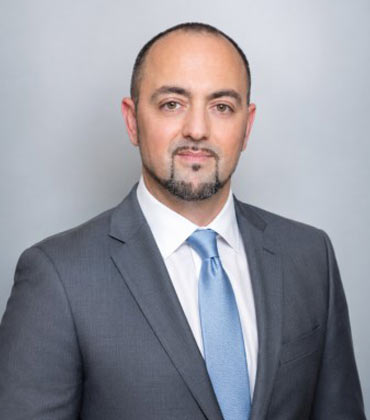
Enzo Bertuzzi
My career began with a degree in Computer Engineering from the University of Bologna and has spanned the technology stack over more than 26 years. After starting out designing high-load post-acquisition database architecture for Coldiretti, I spent 13 years at CRIF S.p.A., progressing from Database Architect to Head of IT Corporate Services. There, I managed banking data for more than 90% of Italian banks, led global teams supporting over 3,000 users and oversaw IT integrations across Germany, India, the United States, Austria and Switzerland.
Earning my Executive MBA at SDA Bocconi strengthened my conviction that technology delivers value only when it creates tangible business impact. Since 2018, I have applied this philosophy as Head of IT at Solution Bank. My expertise in end-to-end IT engineering, spanning software development, infrastructure and data governance, allows me to tackle technical complexity while keeping business priorities in focus. In banking, where trust and responsiveness are essential, my role is to make IT a strategic driver of growth and remove operational friction for colleagues.
Balancing Innovation, Security and Compliance
To balance innovation, cybersecurity and compliance, I take a rigorous approach that embeds security and resilience from the design stage. When we modernized flexible working through a migration to Microsoft 365, we also strengthened our security posture through mobile device management (MDM) and endpoint detection and response (EDR) solutions while consolidating our infrastructure.
With stringent regulatory requirements such as DORA and NIS2 taking center stage alongside the established GDPR, organizations must structure processes around robust frameworks such as ITIL and NIST. Having led compliance programs for DORA and NIS2, I have seen how replacing fragmented manual processes with secure, well-governed architectures turns regulatory compliance into a foundation for business resilience.
Applying AI Where It Delivers Value
To move artificial intelligence from theory to practice, I have combined hands-on experience with specialized education, completing the master's program in Data Science, Big Data & AI for Finance at 24 Ore Business School and the AI for Professionals certification at Volta Institute. My approach begins with identifying operational bottlenecks. I look for areas where automation can deliver measurable returns, not opportunities to apply AI without a clear purpose.
One example at Solution Bank involved cross-border deposit gathering. We implemented robotic process automation (RPA) to automate workflows for deposit accounts originating in another EU country. The initiative reduced processing times, minimized human error in repetitive data entry and allowed us to handle higher volumes without increasing operational overhead.
-
Without clean, secure, integrated and well-governed data, no AI system can produce reliable results.
We are now pursuing projects to integrate AI into business processes guided by the same principle: freeing people from low-value tasks so they can focus on analysis, client relationships and strategic decisions.
Aligning Technology with Risk Management
In financial institutions, technology transformation cannot happen in isolation. Having held IT Manager and Chief Information Security Officer (CISO) roles, I understand the perspectives of control functions. IT, Risk Management and Compliance should work together from the outset of every initiative. Early alignment with Risk and Compliance during a core banking migration, for example, enables secure execution without unnecessary delays. When we relocated our headquarters, I led IT, logistics and staff setup activities.
The same rigor must extend to external partners. Selecting and managing IT outsourcing providers requires structured market analysis and ongoing governance. I view technology vendors as strategic partners integrated into our risk management processes and held to the same standards of quality, security and compliance required under regulations such as DORA.
Clear communication that translates technical details into risk metrics and business opportunities is essential to aligning internal and external stakeholders.
Preparing for AI and Regulatory Complexity
Banking IT leaders must prepare for growing complexity on two fronts: the rapid evolution of AI architectures, which also shapes cyber threats, and a European regulatory landscape encompassing DORA, NIS2 and the AI Act. These requirements demand comprehensive oversight of the digital supply chain and its data.
Having worked in software architecture for more than a decade before moving into IT leadership, I believe data governance is the main challenge in scaling AI. Without clean, secure, integrated and well-governed data, AI systems cannot produce reliable results.
My advice for adopting AI at scale is to embed it within well-governed, traceable processes with clear human oversight, rather than treat it as a black box. Technology professionals aspiring to leadership roles in financial services should look beyond technical excellence. Understanding the business, developing communication skills and learning to think strategically are equally important. I found my Toastmasters public-speaking experience invaluable in strengthening these abilities.
Leaders who combine engineering expertise with managerial perspective and a strong risk culture will be best positioned to guide the banks of the future.

