
A featured contribution from Leadership Perspectives: a curated forum reserved for leaders nominated by our subscribers and vetted by the Construction Tech Review Advisory Board.

Danone
Transformation that Lasts: Turning Ambition into Everyday Impact
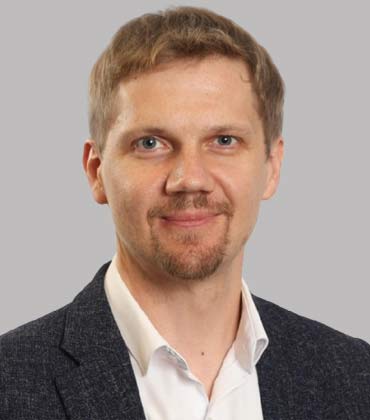
Transformation Governance Authority
Andrey Malyy is a computer scientist by training. He has built his career across Procter & Gamble, Sanofi, Saint-Gobain and most recently Danone. Across these organisations, he has held leadership roles spanning advanced analytics, product management, R&D, commercial functions, supply chain and operations, and mergers and acquisitions.
Over the past decade, his work has centred on enterprise-wide transformation. That work has brought together technology modernisation, organisational design and data-driven capabilities to help global organisations operate with greater scale, speed and strategic impact.
Through this article, Malyy shares that transformation lasts when technology serves real business needs and when change is supported by clear purpose, disciplined execution and foundations strong enough to hold over time.
Transformation Begins with the Strategic Problem
My work centres on reshaping how organisations create value. That starts with customer and patient experience, operational efficiency and faster decision-making. Technology matters, but only when it is applied with clear intent.
The starting point is always the business problem. When the strategic challenge is clear, technology choices become more deliberate. Experimentation also becomes more practical, shifting from exploration to application with a defined outcome.
This approach has remained consistent across my roles at Procter & Gamble, Sanofi, Saint-Gobain and Danone. In healthcare, AI helped accelerate diagnosis and supported clinicians with tools that improved accuracy and speed. Digital therapies strengthened patients’ ability to manage chronic conditions in their daily lives. In industrial settings, virtual reality helped architects evaluate materials and solutions more effectively. That capability improved design decisions and strengthened commercial storytelling. Reusable technology components also allowed sales and marketing teams to personalise engagement and move faster, without relying on long development cycles.
Building this kind of impact requires more than just a technical solution – it needs a strong mandate. Early executive sponsorship is essential. Without clear backing from top leadership, transformation struggles to achieve strategic impact or sustain momentum.
The Discipline behind Enduring Change
Lasting change depends on what remains after early momentum fades. Initial progress often looks promising. Over time, however, organisations can drift back to familiar operating patterns if ownership and support are unclear.
This challenge appears frequently in product-centric and agile transformations. Teams complete training and celebrate early wins.
As work continues, gaps in accountability and dependency management emerge. Progress slows. Without the right support, people return to old practices.
Sustained transformation requires change capability to be embedded in the organisation. Responsibility must be clearly assigned. Scrum masters support agile delivery. Data stewards protect governance. Product owners maintain focus and direction. These roles translate intent into execution and stabilise new ways of working beyond the launch phase.
Cross-functional ownership is just as important. Digital, data and product-centric transformations do not sit within a single function. Business leaders must understand the scope of the digital product, the capabilities involved and the decisions they own. When expectations are reinforced through coaching and ongoing support, the operating model becomes part of everyday work rather than a temporary initiative.
In my experience, formal cross-functional Centres of Excellence (CoEs) have been an effective way to convert transformation delivery into sustainable operations.
Leadership also plays a defining role. Senior management must model new ways of working, not just endorse them. Regular feedback sessions and knowledge-sharing forums help build openness and encourage collaborative problem-solving.
Embedding Intelligence in Everyday Work
When bringing intelligent solutions into an organisation, I start with responsible practices. Technology has moved beyond simple scripts. Today, it includes AI models that support major processes and everyday decisions across different domains & industries (clinical work, supply chain and financial planning etc). When tools begin to shape decisions, trust becomes essential.
That is why governance comes first. Legal and compliance teams must be involved early to clarify how data can be used. When the boundaries are clear, people are more willing to rely on intelligent systems in their daily work.
Progress then depends on people. Technical experts understand what the tools can and cannot do. Business teams understand where those tools fit into real workflows. Individuals who can connect innovation with operations help bridge this gap and make intelligent solutions usable in practice.
-
Confidence grows from what people experience in their own work, rather than from what they are asked to imagine.
Momentum builds when teams see clear results. Clinical trials that confirm digital therapy can strengthen drug treatment for multiple sclerosis and change how clinicians engage with new tools. Sales teams respond differently when VR helps architects visualise materials, driving an increase in conversion rates. R&D and marketing teams gain confidence when digital, data and AI tools allow them to qualify hair-care innovations three times faster. The same shift happens when AI replaces manual reviews of a small number of customer calls with analysis of all interactions, producing clear next steps.
These outcomes do more than prove the technology works. They show teams how intelligent solutions can be applied and scaled. Over time, they form an internal reference model, a practical playbook that demonstrates how structure and flexibility can coexist without undermining trust.
As a result, expectations around adoption and everyday use become clearer. Confidence grows from what people experience in their own work, rather than from what they are asked to imagine.
Building Change that Holds Over Time
From my experience, long-term change comes from clear goals and a shared understanding of what success looks like in real life. Ambition is important, but real progress happens when we have a solid business case and can test our ideas in practice.
Once that clarity is in place, choices become sharper. Transformation opens up a wide field of possibilities, but without discipline, focus erodes quickly. Holding to a small number of non-negotiables, while adjusting with intent as conditions evolved, gives teams a clear direction they can commit to.
For change to stick, people need to see and feel it early. A clear rationale, a vision they could relate to, and support as roles and routines evolve, helps everyone to adapt. When this groundwork is delayed or treated as optional, progress loses coherence and consistency.
Beneath all of that lie the foundations. Data integrity, solid architecture and clear supporting structures make advanced tools useful. When we focus on these basics, transformation becomes part of daily work and not just a temporary effort.

